Welcome,Flow Switches,Shanghai ZanKe Automation Technology Co., Ltd Hotline:18001874240
Language:
 ∷
∷

∷
∷

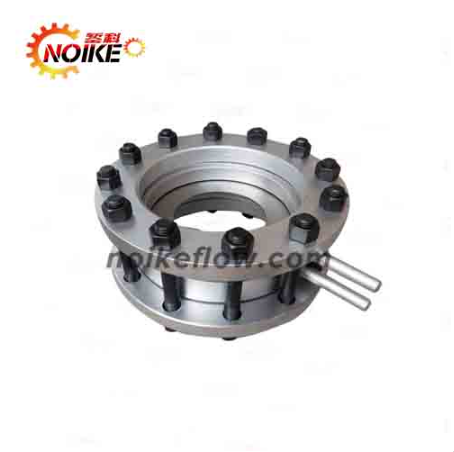
I. V-Cone Flow Meter
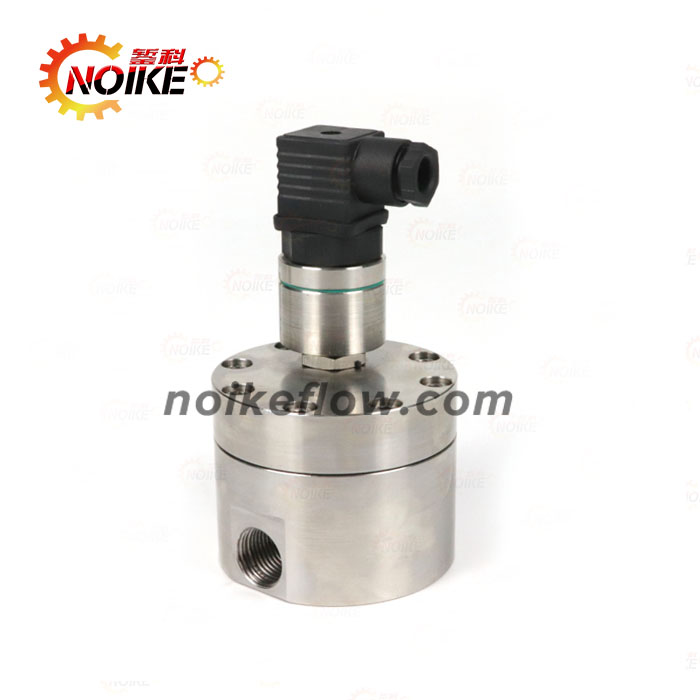
The V-cone gear flow meter is a type of V-cone flow meter.
Overview
The V-cone flow meter (V-cone flowmeter) is a novel differential pressure flow meter. Compared with traditional differential pressure flow meters, it offers significant advantages:
High accuracy and excellent repeatability
Long-term stability and reliability
Low measurement下限 (lower limit) and wide flow range
Minimal straight-pipe requirements upstream/downstream
Low pressure loss, resulting in energy savings
Wear-resistant and resistant to dirty fluids
Long service life and broad applicability (e.g., viscous fluids, solids-laden fluids, high-temperature/pressure fluids)
Robust differential pressure element resistant to deformation
Design Principle (Gear Flow Meter with Dual Flanges)
The V-cone throttling device consists of a tapered cone coaxially installed in the pipe and corresponding pressure taps. The pipe is precision-machined, and the cone generates a differential pressure.
High pressure (positive pressure): Measured at the upstream pipe wall before fluid contraction.
Low pressure (negative pressure): Measured at the cone’s downstream-facing port (central axial tap).
The square root of the differential pressure is proportional to volumetric flow rate, enabling flow measurement.
Theoretical Basis
The measurement follows the continuity equation (mass conservation) and Bernoulli’s equation (energy conservation), with formulas identical to other differential pressure flow meters.
Key Features
High-precision, high-stability differential pressure flow instrumentation.
Accurate measurement across all Reynolds numbers.
Flow conditioning: The sensor body reshapes fluid flow profiles.
Wide turndown ratio and repeatability.
Minimal straight-pipe requirements (no flow conditioners needed upstream).
Noise reduction: The cone dampens pressure pulsations in the differential pressure signal.
No moving parts, ensuring reliability and easy installation.
Low wear: The cone’s profile guides fluid away from the trailing edge, reducing erosion.
Low pressure loss, suitable for low-static-pressure applications.
Annular design: Ideal for dirty or slurry flows.
Applications
Measures:
Gas, liquid, multiphase flows
High-viscosity, high-velocity fluids
Dirty fluids (e.g., coke oven gas, wet gases)
Solids-laden liquids, vibrating flows, EMI-prone environments
II. Integrated V-Cone Flow Meter
Design
Combines advantages of classic Venturi tubes and annular orifice plates, using conical throttling for flow measurement. Unlike traditional designs, it employs annular throttling instead of central orifice throttling.
Principles
Based on Bernoulli’s equation and continuity equation, where flow velocity is proportional to the square root of differential pressure in steady flow.
Advantages
Stability, high accuracy, repeatability
Wide turndown ratio
Low installation requirements
Minimal pressure loss
Suitable for solids-laden/high-pressure fluids, wet gases, and dirty flows
Economic Significance
As a secondary energy meter, it plays a critical role in industries like:
Petroleum, chemicals, light industry
Metallurgy, textiles, food, pharmaceuticals
District heating systems (large-pipeline steam measurement)
Variants
Later developments include V-cone flow meters for:
Thermal oil, engine oil, heavy oil, gear oil
Conclusion
For detailed specifications on V-cone gear flow meters, contact Zanke’s technical team. Pricing varies based on customization and order volume.
Contact:Mr.Tu
Tel:18001874240
Email:noike009@foxmail.com