Welcome,Flow Switches,Shanghai ZanKe Automation Technology Co., Ltd Hotline:18001874240
Language:
 ∷

∷
∷


:Home> English Website common problem
A wall-mounted level meter generally refers to a level measurement device installed on the outside wall of a tank or vessel, without requiring the sensing element to be inserted directly into the liquid. Its working principle depends on the technology used. One possible approach is external ultrasonic level measurement, which uses ultrasonic wave propagation characteristics and acoustic signal changes to detect liquid presence or level position through a suitable vessel wall and coupling structure.
The main advantages of wall-mounted level measurement include avoiding additional openings in the tank, reducing the need for direct contact between the sensor and the process medium, and simplifying certain retrofit installations. However, measurement performance can be affected by tank wall material, wall thickness, vessel structure, liquid properties, and sensor coupling conditions. Therefore, this type of instrument is not suitable for every tank or application.
Before selecting a wall-mounted level meter, users should confirm the specific measurement technology, required measurement function, and compatibility with the actual tank and operating conditions.
Working principle: Wall-mounted level meter describes an installation approach rather than a single measurement technology. Dedicated external ultrasonic systems use acoustic propagation, reflection, or other signal characteristics to detect liquid level or liquid presence.
Main advantages: Suitable designs can avoid additional tank openings, reduce direct contact with the process medium, and simplify certain installation and maintenance tasks.
Main limitations: Tank wall material, thickness, lining, corrosion, bubbles, and installation conditions can affect signal transmission and measurement reliability.
Typical applications: These devices may be considered for tanks that are difficult to modify, applications where direct liquid contact should be reduced, or retrofit projects, provided the installation conditions are suitable.
Selection criteria: Consider whether continuous level measurement or high/low-level detection is required, along with the medium properties, tank structure, output signal, and operating environment.
A wall-mounted level meter is generally installed on the outside of a tank or vessel. Depending on its design, it detects the internal liquid level through the vessel wall, a dedicated measurement window, or a specialized acoustic coupling structure.
Compared with conventional insertion-type level instruments, its key feature is that certain designs can detect liquid presence or level information without placing the sensing element directly into the liquid.
Products described as wall-mounted or externally mounted level meters may use different technologies, including:
External ultrasonic level measurement: Uses ultrasonic propagation characteristics through a suitable tank wall to detect liquid presence or level.
External optical level detection: Uses changes in light reflection, refraction, or transmission at specific material and liquid interfaces. Its suitability depends on the vessel material and optical properties.
Other specialized external detection technologies: Their working principles depend on the vessel design, measurement target, and manufacturer's specific technology.
These technologies differ in their detection methods, suitable vessel types, and output functions. The product name alone is not sufficient to determine its performance.
For external level measurement devices based on ultrasonic technology, the acoustic path depends on the specific product design. Certain specialized systems couple ultrasonic waves through the outside wall of a vessel and identify the liquid level through reflections, propagation time, or changes in other acoustic characteristics.
An ultrasonic transducer converts an electrical signal into high-frequency mechanical vibration, generating ultrasonic waves.
In a dedicated through-wall measurement system, the acoustic signal passes through the coupling interface between the transducer and the tank wall and follows the acoustic path defined by the instrument's design.
A conventional air-coupled ultrasonic level meter usually emits ultrasonic waves from above the tank and receives echoes reflected from the liquid surface. This is a different measurement arrangement from a specially designed through-wall ultrasonic system, and the two should not be treated as interchangeable.
When ultrasonic waves encounter interfaces between different media, such as a tank wall and liquid or a liquid surface and gas, the waves may be reflected, transmitted, or otherwise altered.
A dedicated instrument analyzes the resulting signals to determine whether liquid has reached a particular detection point or, if specifically designed for this purpose, to calculate the liquid level.
The signal processing method varies by product. The measurement algorithm and performance specifications of one instrument should not be assumed to apply to all wall-mounted level meters.
Depending on the instrument's functionality, the detected signal may be used for the following purposes:
Level switches: Detect whether the liquid has reached a preset high or low level and provide a switching signal.
Continuous level meters: Continuously measure liquid level using a system specifically designed and calibrated for that function.
Monitoring and control systems: Transmit measurement data to PLCs, controllers, or monitoring systems through the interfaces supported by the particular model.
An important distinction is that an external level switch typically detects liquid at a specific point. It should not automatically be considered a continuous level meter capable of measuring the full liquid height.
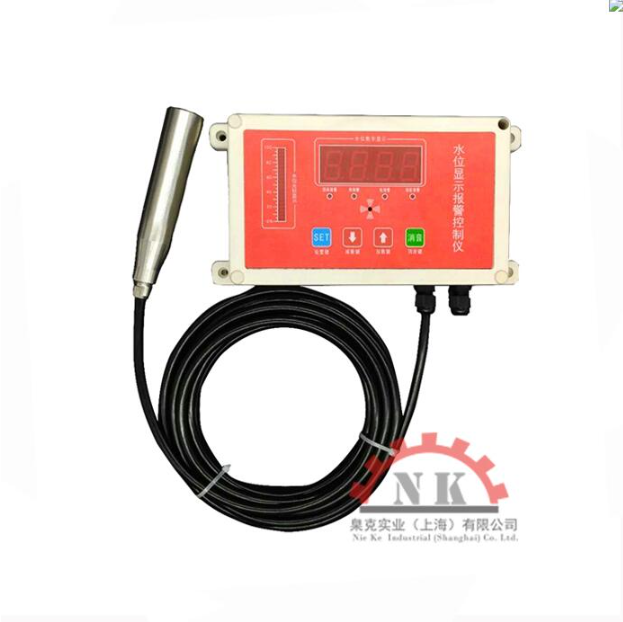
Dedicated externally mounted products generally do not require an additional opening in the tank solely for sensor installation.
This can be beneficial for tanks already in operation, vessels that are difficult to modify, or installations where additional penetrations are undesirable.
Because the sensor is installed outside the vessel, suitable products can avoid direct immersion of the sensing element in the liquid.
This can be advantageous for corrosive media, contamination-sensitive processes, or applications where minimizing wetted components is important.
However, the compatibility of the tank wall, coupling components, and any other wetted structures must still be evaluated against the actual operating conditions.
When the tank structure, external wall material, and measurement conditions are suitable, external installation may reduce the amount of modification required.
Whether installation can be completed without shutting down the process depends on the specific product, operating conditions, and site safety requirements. This capability should not be assumed for every model.
External installation can reduce the need to remove immersed probes and may avoid certain problems associated with prolonged direct exposure to corrosive or contaminating liquids.
However, wall-mounted level meters are not maintenance-free. Sensor coupling, mounting fixtures, vessel wall conditions, and electrical connections still require periodic inspection.
This is one of the key limitations of external ultrasonic level measurement.
When ultrasonic waves pass through a tank wall, their transmission can be affected by material properties, wall thickness, coatings, linings, and coupling conditions.
Certain metal walls, thick-walled vessels, or tanks with specialized internal linings may cause excessive signal attenuation or prevent reliable signal detection.
Therefore, it should not be assumed that the same external ultrasonic level meter can operate effectively on every metal tank, plastic tank, or glass vessel.
External ultrasonic sensors generally require a suitable mounting position, stable contact, and the installation conditions specified by the manufacturer.
Uneven mounting surfaces, thick coatings, corrosion layers, or unstable coupling between the sensor and tank wall may reduce signal quality.
Some products also require specified coupling materials, mounting brackets, or fixing arrangements.
Depending on the measurement technology, bubbles, entrained gas, foam, suspended particles, and changes in liquid conditions may affect ultrasonic signal propagation or detection results.
The extent of these effects depends on the specific measurement principle. It is not accurate to assume that every wall-mounted level meter will be affected in the same way.
For liquids containing significant amounts of bubbles, foam, or solid particles, suitability should be verified using the manufacturer's technical documentation and, where necessary, practical testing.
Some externally mounted level products are designed only to detect whether liquid is present at a fixed point. They do not necessarily measure the full liquid level in a tank.
If an application requires continuous level measurement, level percentage, liquid volume calculation, or remote trend monitoring, users must confirm that the selected model supports the required measurement function, calibration method, and output interface.
High-temperature or low-temperature service, pressure vessels, vacuum vessels, hazardous areas, and tanks with specialized linings require careful evaluation against the product's rated operating conditions.
External mounting does not automatically eliminate limitations associated with internal pressure, process temperature, or hazardous-area requirements.
For critical applications such as high-level protection or overflow prevention, the selected measurement solution should also be evaluated against the relevant risk level and functional safety requirements.
Where the tank and process conditions meet the product requirements, external level measurement may be considered for the following applications.
Suitable applications may include certain water storage tanks, equipment reservoirs, and water treatment systems, particularly where additional tank openings or direct liquid contact are undesirable.
For corrosive media or processes with contamination-control requirements, external installation may help reduce direct exposure of the sensing element to the liquid.
However, chemical compatibility, tank wall lining, acoustic properties, and hazardous-area requirements must be assessed individually.
Specialized external level measurement products may be considered when a vessel is difficult to open or when additional measurement connections are not preferred.
For pressure or vacuum vessels, the instrument's actual operating limits and measurement principle must be confirmed. External installation alone does not establish suitability.
In equipment manufacturing and customized system integration, external level detection may be suitable for certain water tanks, coolant reservoirs, or specialized liquid storage equipment.
During the design stage, confirm the vessel material, wall thickness, detection position, level range, output requirements, and available installation space. This helps avoid discovering measurement incompatibilities after the equipment has been manufactured.
The following steps can help determine whether a wall-mounted level measurement solution is suitable for a specific application.
First, determine whether the application requires:
High-level or low-level alarm detection.
Continuous liquid level measurement.
Pump start/stop control or level-based interlocking.
Transmission of level data to a PLC, DCS, or remote monitoring platform.
Different measurement objectives require different instrument types and output functions.
Prepare the following information:
Tank material, such as carbon steel, stainless steel, or plastic.
Tank wall thickness and the presence of any internal lining.
Vessel shape, diameter, and external wall structure.
Proposed sensor installation position.
Any coatings, corrosion, insulation, or other obstructions on the outside wall.
For external ultrasonic products, these details help determine whether the acoustic signal can propagate effectively through the vessel structure.
At a minimum, provide the liquid name, operating temperature, vessel pressure, and information about foam, bubbles, agitation, or significant level fluctuations.
For hazardous chemicals, flammable or explosive media, and critical safety applications, the relevant safety and certification requirements must also be confirmed.
Select the signal interface according to the control system, such as:
Relay switching output.
4–20 mA analog output.
Digital communication interfaces such as RS485.
These are examples of common industrial instrument interfaces, not features available on every wall-mounted level meter. The actual interface, power supply, load capacity, and communication protocol must be verified against the selected model's technical documentation.
Check the manufacturer's specifications for measuring range, accuracy or repeatability, response time, ambient temperature range, ingress protection rating, and installation requirements.
For level alarm applications, confirm that the instrument can reliably detect the intended alarm point. For continuous level measurement, verify performance across the required measurement range rather than checking only a single level point.
| Comparison | Wall-Mounted Level Meter | Top-Mounted Ultrasonic Level Meter | Float Level Switch |
|---|---|---|---|
| Typical installation position | Outside the vessel wall | Above the liquid surface | Usually inside the vessel or installed through a connection that allows contact with the liquid |
| Typical measurement method | Depends on the product; dedicated ultrasonic designs may detect level through the vessel wall | Emits ultrasonic waves toward the liquid surface and receives echoes | Uses mechanical movement of a float as the liquid level changes |
| Direct contact with liquid | Certain external designs do not require direct liquid contact | Typically non-contact with the liquid | The float normally contacts the liquid |
| Continuous level measurement | Depends on the model | Commonly available | Most standard models are designed for point-level detection |
| Main limitations | Tank wall properties, signal coupling, and measurement technology | Installation space, dead zone, foam, and acoustic propagation conditions | Liquid density, buildup, mechanical structure, and material compatibility |
| Key selection factors | Tank structure, measurement principle, and output functionality | Measuring range, dead zone, mounting position, and medium conditions | Alarm level, float design, and medium compatibility |
The table describes typical product characteristics. Actual designs may differ, so the manufacturer's technical documentation should always be used for final selection.
Correct installation is essential for reliable measurement.
Inspect the mounting surface: Ensure that the installation area meets the product requirements and is free from unacceptable corrosion, unevenness, or unsuitable coatings.
Verify the tank wall: Confirm the material, thickness, and lining conditions before installation. Conduct a feasibility test if necessary.
Secure the sensor according to the instructions: Use the specified bracket, coupling material, or fixing method to prevent movement.
Avoid unsuitable detection positions: For vessels with internal structures, agitation, incoming liquid impact, or significant level fluctuations, evaluate the mounting position according to the measurement principle.
Complete calibration and functional testing: Follow the manufacturer's instructions to verify the measurement against known levels or actual operating conditions. Check alarm points and output signals.
Establish a maintenance plan: Periodically inspect sensor mounting, external wall conditions, wiring, and signal stability.
For applications involving high-level protection or equipment safety interlocks, reliability should not be established solely by checking a single reading after installation. Appropriate functional verification should be performed according to the application risk.
No. Tank material, wall thickness, internal lining, and structural design can affect measurement feasibility. Suitability must be evaluated against the specific product's operating principle and technical requirements.
Dedicated external mounting products generally do not require an additional tank opening solely for sensor installation. However, other mounting structures may be necessary depending on the product design and site requirements.
Certain external level measurement products can reduce the need for direct sensor contact with corrosive liquids. However, this does not mean that every corrosive application is suitable. Tank wall and lining compatibility, signal transmission conditions, and safety requirements must still be verified.
This depends on the model. Some continuous level measurement products support analog output, while certain level switches provide only switching signals. Confirm the required functionality and interface before purchasing.
Not necessarily. "Wall-mounted" or "externally mounted" generally describes the installation method, while "ultrasonic" identifies the sensing technology. Only products that use an external ultrasonic measurement principle should be evaluated specifically as external ultrasonic level meters.
Accuracy cannot be generalized without considering the specific model and operating conditions. Performance depends on product design, tank wall properties, liquid characteristics, installation coupling, and calibration method. Refer to the manufacturer's published specifications and verify performance under actual operating conditions.
Wall-mounted level meters can provide an external liquid level detection solution for suitable tanks without requiring the sensing element to come into direct contact with the liquid. They may be particularly useful when minimizing tank modifications, reducing maintenance associated with wetted components, or retrofitting existing equipment.
However, suitability cannot be determined by the installation method alone. Tank material and wall thickness, liquid properties, measurement objectives, output signals, and site conditions are essential factors to verify before selection.
For continuous level monitoring, choose a product with the appropriate measurement function and range. For high- or low-level alarms, confirm the detection position, output logic, and reliability requirements of the level switch.
NOIKE-AH provides industrial instrumentation and sensor solutions for flow, pressure, level, and temperature measurement.
If you are selecting a wall-mounted level meter or an external level detection solution, please prepare the following information for technical evaluation:
Tank material and wall thickness.
Liquid name and operating temperature.
Required measuring range or alarm level.
Tank dimensions and installation position.
Required output signal and power supply.
Special environmental or safety requirements.
For further details and product selection assistance, please contact the NOIKE-AH team.
新闻资讯